Night Diver
The reef after dark is a completely different place. This course teaches you to explore it properly.
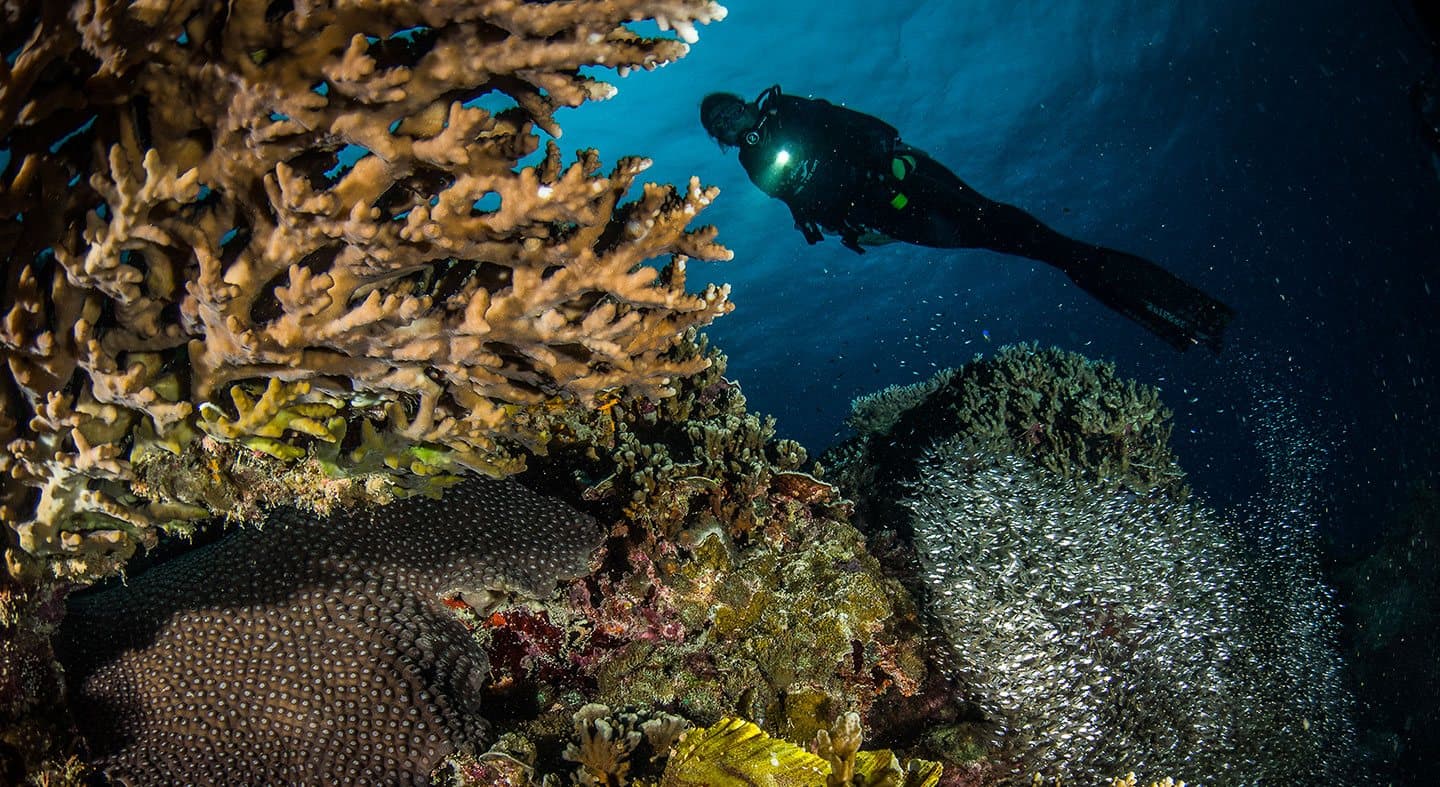
As the light drops out of the water, the reef changes shift. Many of the fish you dove past all day retreat into ledges and crevices, and an entirely different set of nocturnal creatures comes out to feed. Divers who have only ever seen a site in daylight are often surprised at how little of it they'd actually seen.
The NAUI Night Diver course focuses on exactly what changes after dark: dive light technique and hand signals adapted for low visibility, staying oriented and in contact with your buddy without the visual references you'd normally rely on, and managing the natural apprehension that comes with your first few night dives.
None of this is complicated, but almost none of it is intuitive the first time either, which is why it is taught as its own dedicated specialty rather than picked up informally. By your second or third night dive, most divers report it becomes one of their favourite ways to see a familiar site.
What You’ll Learn
- Dive light selection, technique, and backup procedures
- Night-specific hand signals and buddy contact procedures
- Navigation and orientation without daylight visual references
- Marine life behaviour after dark
- Supervised night dives at a familiar or new site
- Dive light failure and backup procedures
What’s Next?
NAUI offers more than fifty specialty courses. Continue building your logbook with additional specialties, or work toward the NAUI Master Scuba Diver rating.
Course Questions
Night Diver, answered
The questions divers ask most before starting this course. Anything else, we’re one message away.
Isn't night diving scary?
The first descent feels different, then most divers are hooked. You dive familiar sites where nocturnal life takes over the reef, and the course exists precisely to replace apprehension with procedure: lights, signals, buddy contact, and orientation.
What extra gear do I need?
A primary dive light and a backup, which we provide during training. You'll learn beam technique, light-based hand signals, and what to do if a light fails mid-dive.
What are the prerequisites?
An Open Water certification (or equivalent) and age 15 for the full rating, juniors 10-14 can earn the junior version.
What will I actually see at night?
The shift change: hunters like moray eels out in the open, octopus and cuttlefish colour-shifting mid-hunt, sleeping fish tucked into the reef, and phosphorescent plankton sparking when you wave a hand through dark water.
Continue Your Training
 Entry Level
Open Water Scuba Diver
Your first NAUI certification and the start of a lifetime of underwater exploration.
View Course Certified Diver
Advanced Scuba Diver
Six open-water dives that turn a certified diver into a confident, well-rounded one.
View Course Certified Diver
Enriched Air Nitrox (EANx) Diver
Longer bottom time, shorter surface intervals, and a better understanding of what you're breathing.
View Course