Enriched Air Nitrox (EANx) Diver
Longer bottom time, shorter surface intervals, and a better understanding of what you're breathing.
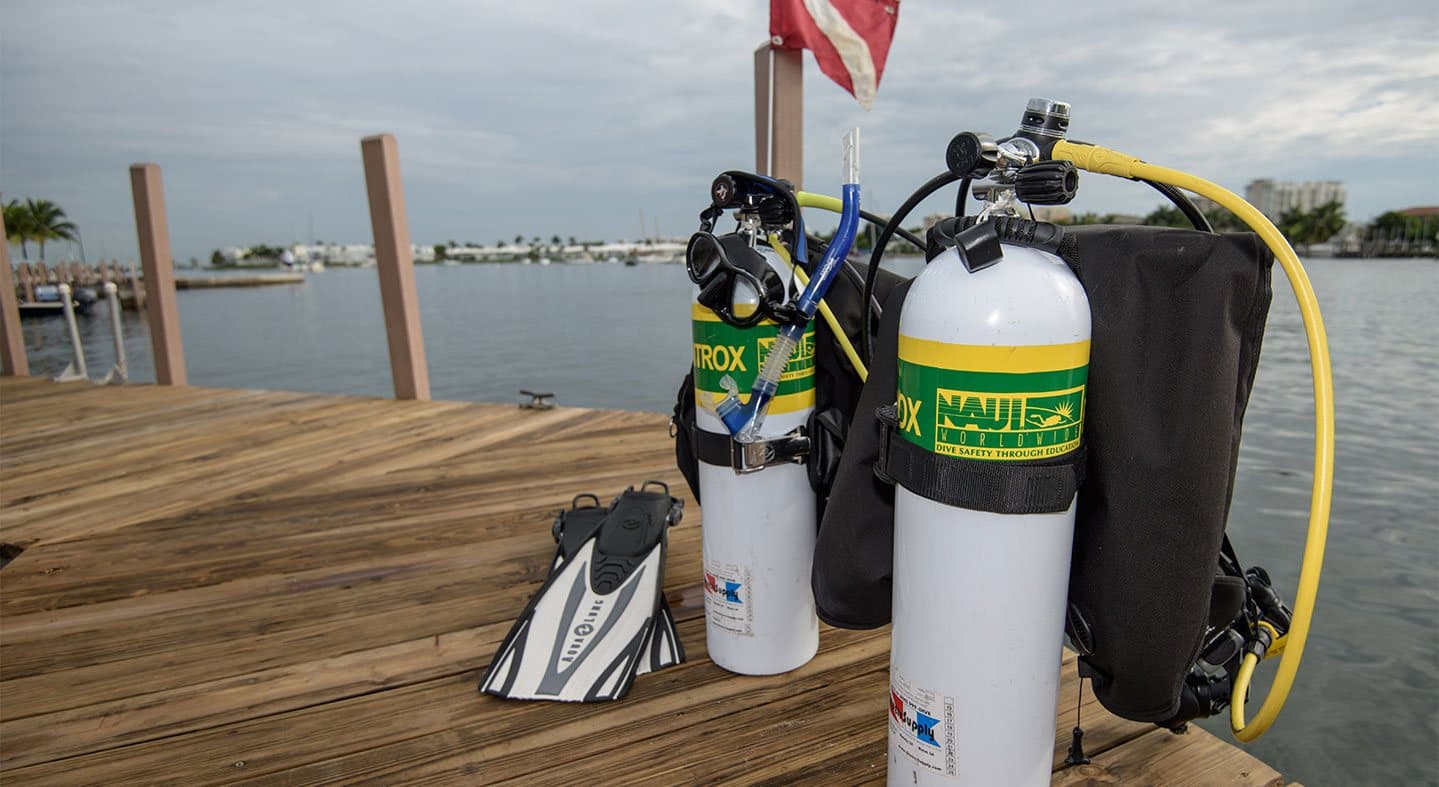
If you have ever cut a dive short because your computer hit its no-decompression limit before your air ran low, Enriched Air Nitrox is the course that solves that problem. By breathing a gas mix with a higher oxygen percentage than regular air, you extend your allowable bottom time and shorten the surface interval between dives.
The course covers exactly what you need to use nitrox safely: how to select the right blend for your planned depth, how to calculate the maximum operating depth for a given mix, how to analyze your own tank before every dive, and the physiology behind oxygen toxicity and why it matters more the deeper and longer you stay.
You will also learn the practical side that trips up self-taught divers: how nitrox interacts with standard air dive tables, common gas-blending and analysis procedures at the dive centre, and the small but important habits (like always personally analyzing your tank) that keep nitrox diving as safe as it is useful.
Nitrox pairs naturally with almost every other course on this site. It can be taught as a standalone specialty, or folded directly into your Open Water or Advanced Scuba Diver training so you certify on both at once.
Certified EANx divers can request nitrox fills (typically blends up to 40% oxygen) at dive centres worldwide, personally analyze their mix, and plan dives around the longer no-decompression limits enriched air allows. It's the single most useful add-on for divers doing multiple dives per day.
What You’ll Learn
- Physiology of oxygen and nitrogen at depth
- Advantages, limitations, and risks of enriched air
- Calculating maximum operating depth for a given nitrox blend
- Personal gas analysis procedures before every dive
- Using nitrox with standard air dive tables and dive computers
- Two open-water dives on enriched air (for full certification)
- Logging and labelling analyzed cylinders correctly
What’s Next?
Continue your training with the NAUI Advanced Scuba Diver, NAUI Rescue Scuba Diver, or NAUI First Aid course.
Course Questions
Nitrox, answered
The questions divers ask most before starting this course. Anything else, we’re one message away.
Does nitrox let me dive deeper?
The opposite, each blend has a maximum operating depth that's shallower than air's limit. What nitrox buys you is time: longer no-decompression limits at typical dive depths and shorter surface intervals between dives.
What exactly will I learn?
Choosing the right blend for a planned depth, calculating maximum operating depth, personally analyzing your cylinder before every dive, and the physiology of oxygen exposure, everything needed to use blends up to 40% oxygen safely.
Can I combine Nitrox with another course?
Yes, it folds neatly into an Open Water or Advanced course so you certify in both at once. As a standalone it's an academic session plus gas-analysis practice, with two enriched-air dives for the full certification card.
Is nitrox dangerous?
Used within its limits it's as safe as air, and gentler on repetitive-dive schedules. The risks come from exceeding a blend's maximum operating depth or skipping analysis, which is exactly what the course trains you never to do.
Continue Your Training
 Entry Level
Open Water Scuba Diver
Your first NAUI certification and the start of a lifetime of underwater exploration.
View Course Certified Diver
Advanced Scuba Diver
Six open-water dives that turn a certified diver into a confident, well-rounded one.
View Course Advanced Specialty
Deep Diver
Plan and execute deep dives between 18 and 40 metres with real margin for error.
View Course